
The Dog with Heritage

Struggling in today’s chaotic environments
The work required to open our world for these dogs of heritage is far from a few exercises or food stuffing around moving traffic. It will take some deep learning that involves changing the way you see behaviour: a move from irritation or embarrassment to quite normal in consideration of their inherited traits.
It is not an overnight or an over-month goal. Absence of regular work is likely to resurge the levels of frustration for the dog, uncertainty or extreme reactions. Doing the work will balance their systems enabling the usual irritants to temporarily pass by.
Even their farm cousins feel the work vacuum and will seek other employment: the post van, low flying jets, browsing chickens can all keep their brains on the even keel. They need the neurochemistry from the working repertoire.
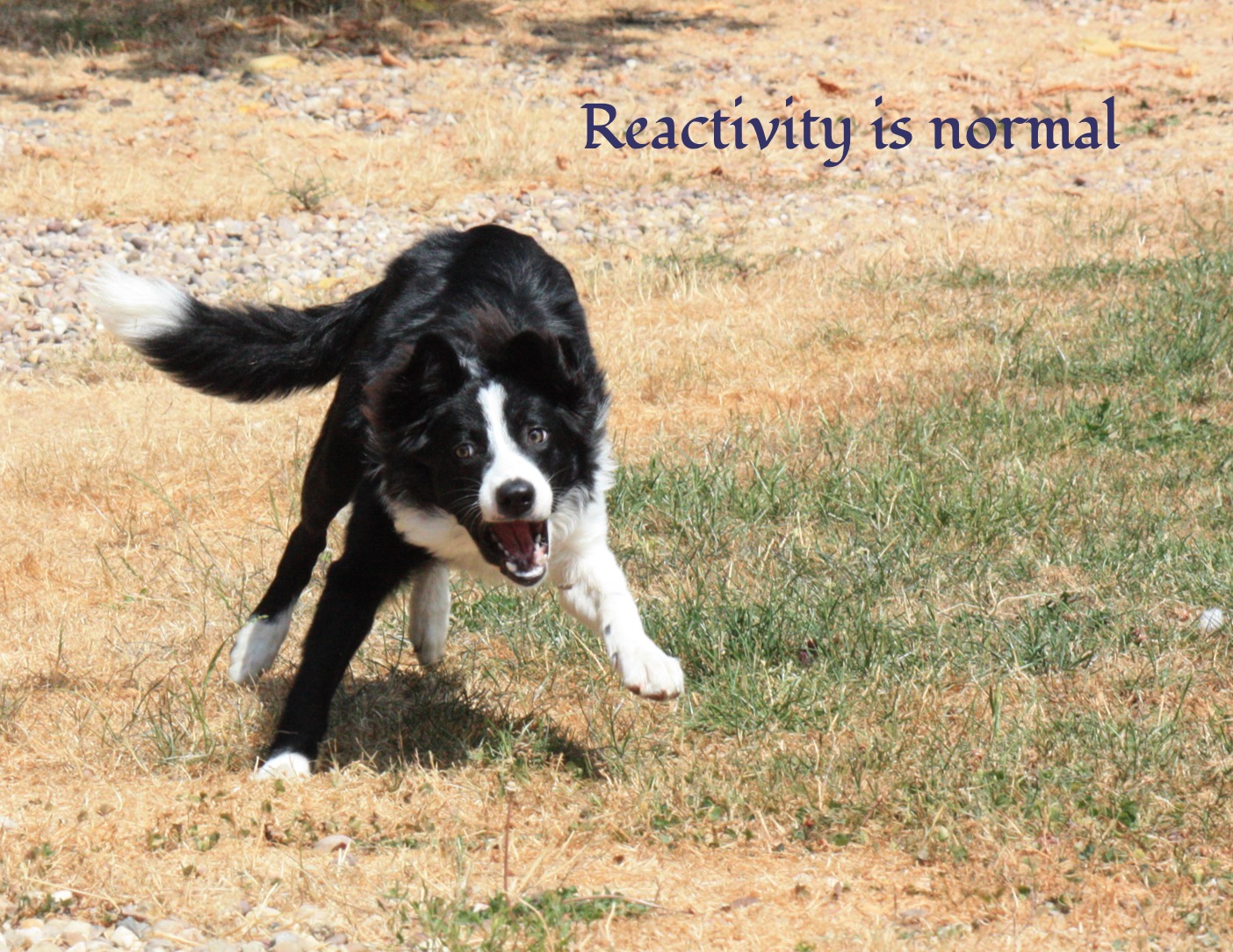
Reactivity is Normal
Non-reactive is dead.
Collies that are slow to react, or simply not interested, are rarely part of the future. Dogs have been selected for their hyper-vigilance to movement and react with the appropriate reply: hey! that is too fast, too close, too wild; where “that” is likely to be traffic, skateboards, drones, children, hats, other dogs - that’s-NOT-a-dog? - cats, squirrels, water. When these wild events do not respond frustration escalates quickly.
They feel a strong need to control this chaos and wildness and that need is poorly served by suppression but we can teach:
- work this instead of that, my sheep not their sheep.
- patience pays off, wait until we reach the open space to roll up your sleeves to work the balls, the discs. Collies have enormous depths of patience when it pays off. Sheep, in particular ewes with lambs, move by suggestion not force.
Extreme or persistent reactions can exhaust the dog and inhibit their learning processes, it is easy to overload their response system with too many stimulus. Even sports dogs are celebrated for their reaction whilst at speed, unhesitatingly responsive and desire to be active. In a different field these reactive dogs are considered first class, good, dogs.
Often it is about changing how we view our dogs, the words we use, and in respect of the 15 year contract with this friend.

What is their Heritage?
The working dogs carry a selection of many characteristics that can form in variable packages different in every dog. Siblings can differ significantly and working traits can skip generations.
A Need to Work (herd)
This is the foundation, or heart beat, for living as a Collie. When work is absent they are likely to self-entertain to experience fulfilment: fence running, chasing swallows, catching flies. Whilst all of these quirks are fine in moderation there is every likelihood they will become extreme and difficult to channel.
Games need a very specific style that avoids chase and enables control and responsiveness. From indoor Mouse games to Sheepballs® and Discs. Collies are players that will teach you 101 new games.
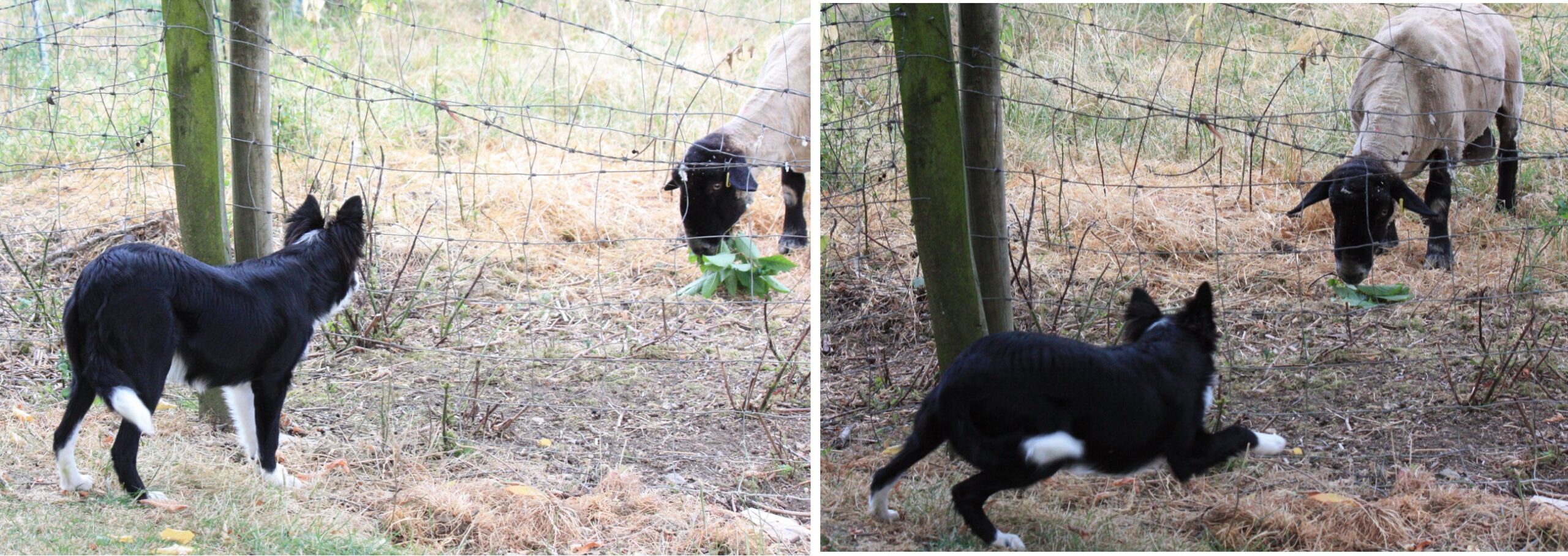
Don’t look at me like that!
Dogs that work stock do not need a hard lesson delivered by angry sheep or irritated cattle. They inherit the recognition that when a beast lowers the head it is preparing to give you a full, hard butt to the face and probably send you airborne. The similarity to people with an approaching stare is obvious. “Oh, is that a Border Collie?”
Collies will react sensitively and often without patience to an incoming face.
This characteristic is celebrated as part of the heritage: to not back down when faced. This is a non-negotiable quality. They are courageous, tenacious and have ever lasting patience with young stock but will deliver lessons where needed.
No Collie wants to learn to fly.

A Pet Brain Repertoire
These are the non-working activities that strengthen connection. Simple movements of self-awareness, coordination, location awareness, targets and a dash of cognitive stretch. Key activities for the moments when stimulus is overloading.
Is this Hyperactivity?
Collies are very interested in all activities that they can be involved in from gardening to car rides. No one can doubt their enthusiasm. They are not comfortable with being left behind, until they are over 14 years old, and can develop frenetic behaviour when recognising preparations to leave them.
But. Leaving a dog that feels they have done the necessary work through games makes it easier to let them dream about tomorrow’s work.
Working Partners
Generations of specific breeding separates Collies from Hounds. They are not dogs that work independently out there hunting scent in every direction and leaving us to bring up the rear and carry home the outcome.
They do not like to be officers but make great soldiers who work as part of a team. This is very often their joy especially when the work is absent.
This need to partner is as strong as their need to work which has elevated them to the top choice for many sports and working roles. A desire to learn the job, work out their tasks and feel that connection for working in sync.
This can lead to a hypersensitivity to get it right, continual feedback is sometimes needed for the worriers: a quiet touch, a moment’s eye contact, time sitting side by side.

Learn to See with New Eyes
Consider the world your dog is responding to. The narrow foot paths that contain and trap, the proximity of movement in peripheral vision, the incoming dogs and people that transmit trouble. Space is a Collie’s super power where they gain most control when at a distance, not forced into physical contact.
Learn to pre-empt risky situations and build the “on the road” skills to be able to develop the Boring Walk, nothing happening here.
Find the Small Rewards
For your dog in all situations.
Access your dog’s stillness to become inherently rewarding and allow you time to breathe and enjoy each other’s company again.
Rehearse your Fire Drills and be confident to walk away from mistakes and evaluate the learning.

We need more Border Collie advocates!
I see too many throw away assumptions that Collies are mad, suffering OCD or simply crazy. The recommendations for these dogs makes my hair stand up, yes I would send them flying. Assertions that these traits are abnormal is a great disservice to the amazing heritage we are lucky to share our lives with.


