
Do We Want Impulse Control?
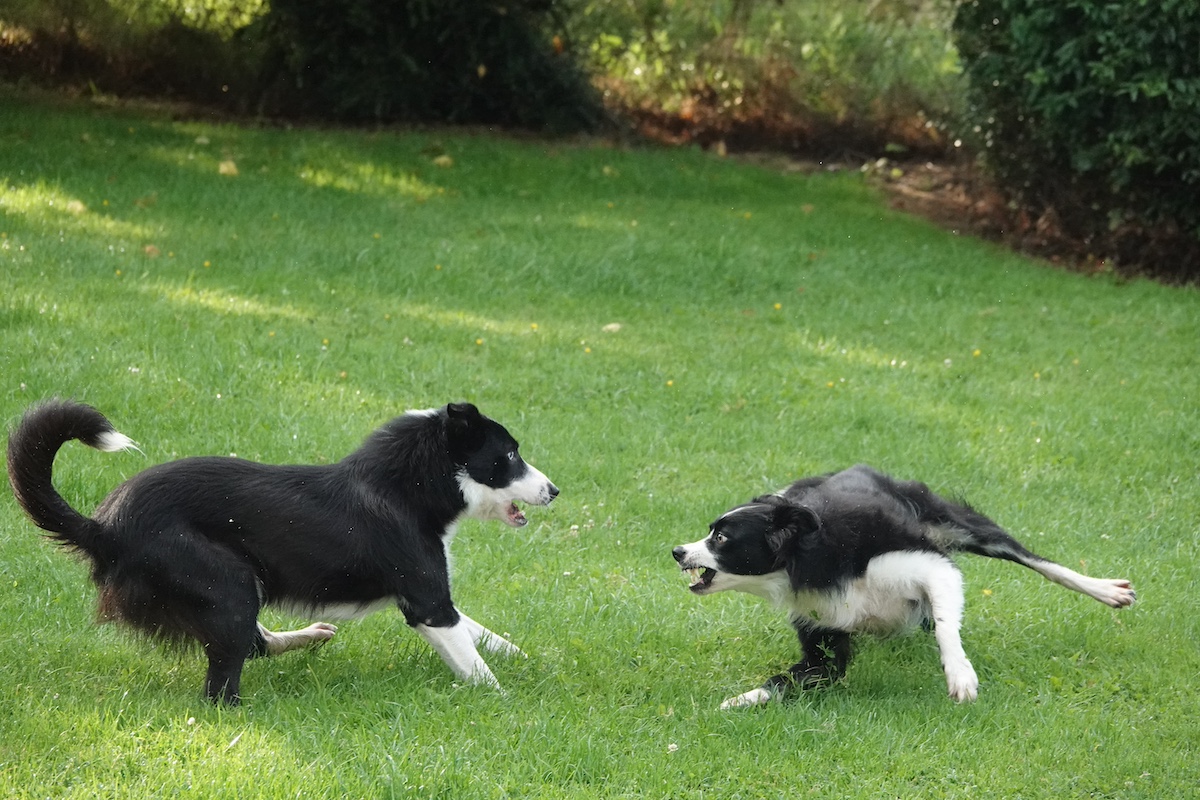
You may have been encouraged to teach your Collie “impulse control”. This is the wrong way of thinking about their urges, and certainly an unhelpful way of dealing with them.
“Impulse Control” is a popular phrase in the dog business, and often regarded as a core consideration in living with sheepdogs. In human terms, the idea of “impulse control” refers to our acquired ability to make rational choices in the face of particular stimuli. In living with dogs, though, it’s often framed as the ability for a dog to pause between the presentation of a stimulus (e.g. a reward) and their response to it, in order to make a rational choice; the argument goes that this will reduce the dog’s tendency to experience frustration when they can’t have what they want, and it will slow down their predatory responses (ironically, this desire for a pause never seems to be a consideration when the stimulus is a human-offered cue for a behaviour…in that case, trainers generally want their dogs to respond as fast as possible).
Yet, while we accept that humans can learn to control their urges just by virtue of existing in an environment where not all desires or urges can be satisfied, we assume that dogs must be taught, and in a way that we deem appropriate. Further, the idea of impulse control in dogs assumes that we must make the decision on their behalf–they must comply with our choice in the face of that stimulus, and that they should wait for our permission to engage.
Unfortunately, because the idea of impulse control in dogs is a human construct, it hits our sheepdogs particularly hard: these are dogs who we have selected to be incredibly alert to the environment, to make fast decisions in response to stimuli, and to be tenacious in their work.
The idea of impulse control in our dogs is another manifestation of the focus on compliance: that dogs are irrational beings whose impulses can and should be curbed by us; that we can achieve this by showing our dogs that we control access to the objects that satisfy their basic biological needs; and that we are fundamentally at odds with them, and they with their ‘best selves’, but this can be resolved by their obedience to us.
In humans, impulse control disorders are regarded as clinical psychiatric disorders stemming from altered neurochemistry (e.g. serotonin levels, the balance of serotonin and dopamine, opioids). These are not common in humans, the aetiology (cause) is still disputed, and there is currently no one known treatment modality. That we attempt to apply the term to our dogs is another example of the cultural norm is of pathologizing their difference from us, thinking of training as a remedy rather than a learning opportunity.
Furthermore, the protocols for “teaching” our dogs impulse control often involve withholding things that they want, or setting them up to make an error so that we can take things away from them: these are bound to lead to disappointment and even frustration for a vast majority of dogs, and don’t go very far towards helping the dog make choices that we find favourable. In fact, what we often see is a hesitation that looks like control; this is purely the suppression of behaviour.
What we are trying to help the sheepdog learn in SheepBalls®, in part, then, is predatory control: how to control themselves around the prey (ball) so that they have the best success at attaining the rewards that enacting their predatory behaviour can bring. Dopamine bathing – the stillness, the crouch, the dropped tail, the lowered ears, the raised paw, or whatever posture your dog adopts in stillness as they await the capture without startling the prey – is one demonstration of predatory control.
Read More
Löw, Andreas, et al. (2008) “Both Predator and Prey: Emotional Arousal in Threat and Reward.” Psychological Science 19.9: 865-873. https://www.ncbi.nlm.nih.gov/pmc/articles/PMC3612950/
Extract from the Flock of Collies: Join


